

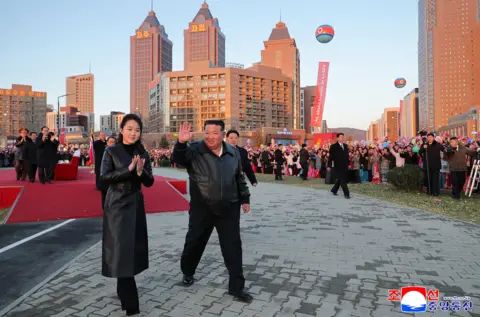
During threats directed at South Korea and vows to expand the atomic arms program, a key question hovered at the latest key meeting: could the leader's 13-year-old child be anointed as the heir?
Although definitive news failed to emerge this week, it has sparked a widespread conversation about the young girl's potential as the prospective ruler of the 25m-strong country, a government only ever ruled by the Kim bloodline.
Heightened Public Profile and Analysis
The girl has become progressively present in official broadcasts next to her parent. Yet, plenty about her continues to be shrouded in mystery. The regime has not once publicly disclosed her full name or verified her date of birth.
She was first revealed internationally in 2013. Since then, she is widely believed to be a teenager, partly on analyst estimates.
Signs of Future Leadership
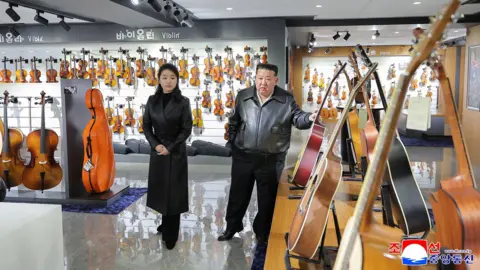
Observers highlight several key signs. Her regular TV spots—typically framed in the shot—and the use of respected terms traditionally used for the leader are seen as clear indicators.
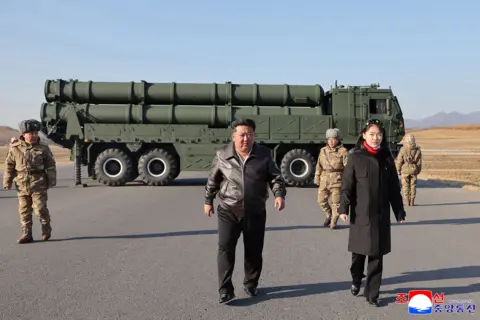
Moreover, her familiarity with the armed forces is deemed an additional important element. She has reviewed soldiers and hardware alongside her father. Multiple times, top officers have been seen bending beside her to confer during armed forces displays.
"The state media is using terminology set aside for the supreme leader. It highlights her own revered status," states one leading analyst.
This military familiarization is considered essential, as supreme authority in North Korea resides with dominance over the armed forces. To be a credible successor, she must present herself as a capable commander.
Debate Over Sex and Tradition
Nevertheless, a substantial opposing view exists. Some experts argue that North Korea's profoundly male-dominated system presents an insurmountable hurdle for a girl leader.
Observers highlight that females at all rank find it hard for equal treatment. Women leaders in top roles are exceptionally uncommon. Everyday beliefs also reflect these norms.
"In such cases, they end the trip then go to the back of their car and spit three times to ward off the bad luck," describes a former DPRK diplomat.
Changing Cultural Realities
Conversely, other observers argue that the role of women in North Korea has evolved notably since the 1990s.
In that crisis, as the public system faltered, females frequently became the key providers, turning to informal business. This has apparently led to a perceptible change in gender dynamics.
One researcher who has spoken to numerous former residents suggests that it is now less uncommon to see women in managerial positions within the country.

"We must not analyze North Korea with Western perspective. We must consider them as the royal court," comments the expert. "What person would dare challenge an individual of royal blood who is assuming the leadership?"
Political Moves
Recent party developments are also being watched. The promotion of Kim Yo Jong, the leader's sister, to a senior ideological post is seen by some as a step to establish a guardian for the possible successor.
In the end, analysts are split. Some view the focus on Ju Ae as a strategic ploy to humanize the leader's public persona and prepare the ground for another family transfer of power. Others insist the evidence of her grooming are sufficiently clear to ignore.
Irrespective, the speculation in and of itself may achieve a purpose for the leadership, keeping international attention firmly locked on the isolated Kim family dynasty.


